

How many minors can you get on a driving test? You can get up to 15 and still pass. The catch is simple. One serious or dangerous fault means a fail, even if you have no minors at all. So the real goal is to stop small mistakes from becoming big ones. Practising your local routes on RouteBuddy is one of the easiest ways to do that.


What Counts as a Minor on a Driving Test?
A minor is the everyday name for a driving fault. GOV.UK describes a driving fault as a mistake that is not potentially dangerous. Think of a slightly late mirror check or a clumsy gear change. Nobody was put at risk, but the examiner still marks it.
Each minor is recorded on your driving test report. At the end, the examiner adds them up. If you have 15 or fewer and no serious or dangerous faults, you pass. You can read the official rules on the GOV.UK driving test faults and result page.
The same rules apply in England, Scotland and Wales. It does not matter which test centre you use or whether you drive a manual or an automatic.
You may also like the most common reasons learners fail and whether a mock test is worth doing. You can also browse driving test routes for every UK test centre.
Minors, Serious Faults and Dangerous Faults Explained
Every mistake on your test falls into one of three groups. Knowing the difference takes a lot of the fear out of test day.
Driving Faults (Minors)
These are small errors with no real danger. You can have up to 15 and still pass. Most people who pass still pick up a few.
Serious Faults (Majors)
A serious fault is something potentially dangerous. For example, you pull out at a junction and another driver has to slow down for you. Just one serious fault means you fail.
Dangerous Faults
A dangerous fault involves actual danger to you, the examiner, the public or property. Again, one is enough to fail.
This is why 15 minors and a pass is a better result than 2 minors and a serious fault. The number of minors only matters when the rest of your drive is safe.
Can Repeated Minors Turn Into a Serious Fault?
Yes, they can. GOV.UK states that if you keep making the same driving fault, it could become a serious fault.
Picture this. You forget to check your mirrors before signalling once. That is likely a minor. Now imagine you do it at almost every junction. The examiner can see a pattern, not a one off slip. That pattern can be marked as a serious fault.
So you could finish with only 6 minors on paper and still fail. If the same mistake keeps showing up in your lessons, treat it as a warning sign. A few different small errors are far less of a problem.
Where Do Learners Pick Up the Most Minors?
The official DVSA list of the top 10 reasons for failing the driving test shows where things go wrong most often. The top five are:
- Not making effective observations at junctions
- Not using mirrors correctly when changing direction
- Not moving off safely
- Incorrect positioning when turning right at junctions
- Not responding appropriately to traffic lights
These same areas are where most minors come from. A quick glance instead of a proper look at a junction is a minor. Do it again on a busy road and it can become a serious fault.
Unfamiliar roads make all of this harder. A complex roundabout or a hidden junction adds pressure, and pressure leads to rushed checks. Our guide to common roundabout mistakes covers one of the biggest problem areas in detail.

Do Show Me Tell Me Questions Count as Minors?
You get two vehicle safety questions during the test. The tell me question comes before you drive off. The show me question comes while you are driving.
If you get one or both wrong, you get one driving fault. It will not fail you on its own. However, if you lose control of the car while doing a show me task, that can be marked as a serious or dangerous fault.
The full list of questions is on the GOV.UK show me tell me questions page. Learn them early so they become one less thing to worry about.
What Happens If You Make a Mistake Early On?
Keep driving. A mistake does not end your test. According to GOV.UK, the examiner will only stop the test if your driving is a danger to other road users.
Many learners lose their focus after one error. They replay it in their head and then make three more. Let it go. You have no idea whether the examiner even marked it.
The same goes for the independent driving section. If you take a wrong turning, you do not get a fault for that alone. The examiner will help you get back on the route. You can see how each part of the test works on the GOV.UK guide to what happens during the test.
How Can Learners Keep Their Minors Low?
You do not need a perfect drive. You need a safe, steady one. These habits make the biggest difference.
Make Your Checks Obvious
Move your head when you check mirrors and blind spots. A quick flick of the eyes is easy to miss. A clear head movement shows the examiner you looked.
Get to Know the Roads Around Your Test Centre
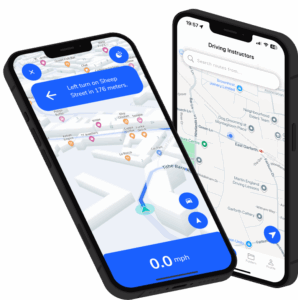
Most minors happen on roads you have never driven. With RouteBuddy, you can practise routes around your test centre with turn by turn sat nav directions. When the junctions feel familiar, you have more time to think about your observations.
Sit a Mock Test
Ask your instructor to mark a full drive as if it were the real thing. It shows you where your minors come from and whether any of them repeat.
Brush Up on the Rules
Many faults around signs and road markings come from gaps in knowledge, not skill. A short read of The Highway Code each week keeps the rules fresh.
What If You Fail Your Driving Test?
If you fail, the examiner will tell you what faults you made. Use that feedback. It tells you exactly what to work on before your next attempt.
You will need to book another test and pay again. The new date must be at least 10 working days away. You can book through the official GOV.UK driving test booking service. For a calm plan on what to do next, read our guide on moving forward after a failed test.
Driving Test Minors: Quick Answers for Learners
Is 15 minors a pass?
Yes. As long as you have no serious or dangerous faults, 15 minors is still a pass.
Do 16 minors mean a fail?
Yes. Once you go over 15 driving faults, the result is a fail.
Can you pass with zero minors?
Yes. It is rare, but a clean sheet is possible. Most people who pass have a handful of minors.
Do minors go on your licence?
No. Driving test faults are part of your test result only. They do not appear as points on your licence.
Are the rules the same at every test centre?
Yes. The 15 minor limit applies at every centre. Pass rates do vary across the country, though. Our article on the UK driving test pass rate explains what the numbers really mean.
The Bottom Line
So, how many minors can you get on a driving test? The answer is 15. But the limit is not the goal. Avoid serious faults, stop the same mistake from repeating and stay calm after a slip. Do those three things and the minors usually take care of themselves.
The easiest way to cut your minors is to know the roads before test day. Download RouteBuddy and practise the routes around your test centre today.