

If you are preparing for your practical driving test, understanding the UK driving test pass rate is one of the smartest things you can do before booking your slot. Not because the numbers should put you off. They tell you exactly what you are up against, and where your preparation needs to be sharpest.
The headline figure sounds simple enough. Roughly half of all candidates fail their practical driving test on the first attempt. Dig into the data, though, and a more interesting picture emerges. Your choice of test centre, the time of year, and the specific roads you are examined on can all have a measurable impact on your chances.

The UK Driving Test Pass Rate: What the Numbers Actually Say
According to the DVSA’s official driving test statistics, the national average pass rate for the car practical test in Great Britain sits at around 47 to 49 percent. That figure has remained broadly consistent over the past decade, despite changes to the test format in 2017.
To put it plainly: for every ten people who sit their test on any given day, roughly five will pass and five will not.
What those averages hide is the dramatic variation between individual test centres. The UK driving test pass rate is not a single number. It is a spectrum, and where you fall on that spectrum depends heavily on where you sit your test.
Why Does the UK Driving Test Pass Rate Vary So Much Between Test Centres?
The Road Network Makes a Significant Difference
The most important factor in a test centre’s pass rate is the complexity of the surrounding roads. Examiners do not design their routes to be deliberately difficult. They use the public roads available to them. But some test centres are surrounded by demanding road networks almost by default.
A test centre in a busy city centre sends candidates through multi-lane roundabouts, complex junctions, bus lanes, and high-traffic A-roads within the first few minutes. A test centre in a smaller town might cover quieter roads and simpler junctions throughout the entire test.
This is not about fairness. It is simply geography.
Traffic Volume and Time of Day
Higher traffic volume means more decisions per minute. More decisions mean more opportunities to make a fault. Test centres in urban areas naturally expose candidates to more complex driving scenarios than rural or suburban centres.
The DVSA’s guidance on what happens during your driving test confirms that tests typically last around 40 minutes and cover approximately 10 miles. Those 10 miles mean very different things in central Birmingham compared to a quiet market town in Lincolnshire.
Examiner Consistency Across All Centres
Examiners follow a standardised marking system set by the DVSA. The criteria for minor, serious, and dangerous faults are the same at every test centre in Great Britain. The difference in pass rates is not down to stricter examiners. It comes down to the roads themselves presenting different levels of challenge.
How Geography Creates an Uneven Playing Field
It is worth understanding this point clearly before you book your test. Two candidates with identical driving ability can sit their test on the same day and get very different results. One tests in a quiet suburb. The other tests near a busy ring road. The roads determine the difficulty, not the driver.
This is why knowing your test centre matters so much for UK driving test pass rate preparation.
The Test Centres With the Lowest Pass Rates in the UK
Consistently, the test centres with the lowest UK driving test pass rates are located in dense urban areas. Based on DVSA data, centres that have historically recorded some of the lowest pass rates include:
- Belvedere (South East London) – frequently cited as one of the most challenging, with pass rates dipping below 30 percent
- Erith (South East London) – similarly low, reflecting the complexity of the surrounding road network
- Coventry city centre – high traffic volume and complex junctions contribute to a below-average pass rate
- Birmingham (Kings Heath) – busy urban routes with multiple roundabouts and junctions
- Gillingham (Kent) – consistently below the national average
These figures shift year on year. The most current data is always available through the DVSA’s official statistics portal. If your test centre appears on a list like this, it is not a reason to panic. It is a reason to prepare more specifically.
The Test Centres With the Highest Pass Rates in the UK
At the other end of the scale, test centres in less congested areas consistently record pass rates well above the national average. Centres in rural Scotland, parts of Wales, and smaller English market towns often see pass rates of 60 percent or higher.
Examples of centres that have historically performed well above average include:
- Mallaig (Highland, Scotland) – regularly among the highest in Great Britain
- Lerwick (Shetland) – very low traffic volume contributes to a high pass rate
- Llandrindod Wells (Powys, Wales) – quieter roads and simpler junctions
- Inveraray (Argyll, Scotland) – consistently above average
Should You Book at a High-Pass-Rate Centre?
This is a question many learners consider. The honest answer is no. Booking a test in a high-pass-rate area simply to improve your odds is not a reliable strategy. You still need to know those specific roads. Travelling to an unfamiliar town introduces its own uncertainties. The better approach is to understand your local test centre and prepare specifically for it.


How Knowing Your Pass Rate Shapes Your UK Driving Test Pass Rate Preparation
Understanding where your test centre sits in the national picture changes how you should prepare. If you are testing at a centre with a pass rate below 35 percent, you already know the roads are going to challenge you. That tells you to:
- Prioritise time on the actual test routes rather than general driving practice
- Focus on the hazard types that appear most on those routes, such as roundabouts, busy junctions, and complex traffic light systems
- Check the DVSA’s most common test faults data to understand what catches candidates out at your specific centre
If your test centre has a higher pass rate, that does not mean you can prepare less. It means the roads are more forgiving, but you still need to know them.
How RouteBuddy Helps You Prepare for Your Test Centre
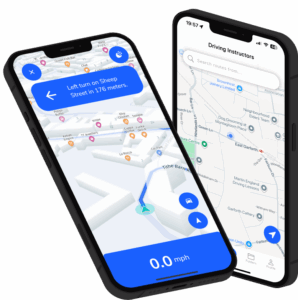
This is exactly the gap that RouteBuddy was built to fill. Rather than going into your test with only a general sense of how to drive, RouteBuddy gives you access to your local routes used by DVSA examiners at test centres across the UK. It comes with turn-by-turn voice guidance that mirrors the sat-nav section of the actual test.
Practice on the Roads That Actually Matter
If you are testing at a centre with a low UK driving test pass rate, that typically means complex roads and demanding junctions. RouteBuddy puts you on those exact roads before test day. The junctions, roundabouts, and tricky stretches become familiar before it matters most.
Always Up to Date
Every route in the app is kept current with road layouts, speed limits, and traffic conditions. What you practise reflects what you will actually face on the day.
What the UK Driving Test Pass Rate Data Tells Us About Failure
Looking at the DVSA’s breakdown of the most common faults, a clear pattern emerges regardless of test centre. The highest-frequency faults across Great Britain are:
- Junctions – incorrect observations when emerging or turning
- Mirrors – failure to check or demonstrate checking before manoeuvres
- Positioning – wrong lane choice, particularly at roundabouts
- Traffic signals – hesitation or incorrect response at traffic lights
- Steering – wide turns or incorrect positioning through bends
These faults are not random. They cluster around specific types of road features. Those features appear most frequently at the test centres with the lowest pass rates. Knowing this lets you practise with purpose. Rather than logging miles on familiar roads, you focus on the specific scenarios that cause the most failures at your test centre.
How to Look Up Your Test Centre’s Pass Rate
The DVSA publishes pass rate data for every test centre in Great Britain, updated annually. You can access it directly through the DVSA’s driving test statistics.
When you look up your centre, pay attention to:
- The overall pass rate as a percentage
- How it compares to the national average of around 47 to 49 percent
- Whether the rate has been consistent over multiple years or has shifted recently
A consistently low pass rate over several years signals that the roads are genuinely demanding. A recent dip might reflect temporary factors like roadworks or changes to local traffic patterns.
Practical Steps to Improve Your UK Driving Test Pass Rate Chances
Once you understand the picture at your test centre, here is how to act on it:
- Look up your centre’s pass rate using the DVSA’s official statistics
- Identify the most common fault types at your centre and build your lessons around them
- Drive the local test routes using RouteBuddy before test day, more than once if possible
- Study the Highway Code for roundabouts, junctions, and signals at the official Highway Code page
- Do a full mock test with your instructor on the real routes, with no prompting
- Book at a sensible time and avoid peak rush hour unless you have practised in those conditions
The Bottom Line
The UK driving test pass rate is not a fixed wall that half of all candidates crash into by chance. It is a reflection of preparation, familiarity, and confidence on specific roads. Candidates who fail are not, in most cases, poor drivers. They are drivers who encountered something unexpected and lacked the experience to handle it calmly.
Understanding the pass rate at your test centre tells you what to expect. Practising on the actual routes removes the unexpected. That combination is what genuinely shifts the odds in your favour.