

Driving in Warwick, a historic town in the West Midlands, offers learners a diverse set of driving conditions, from narrow residential streets to multi-lane roundabouts and fast A-roads. The Warwick Driving Test Routes are designed to test your skills in both urban and rural environments, challenging your ability to navigate complex junctions and roundabouts. This blog provides 20 essential FAQs about the Warwick Test Centre to help you prepare thoroughly for your driving test.
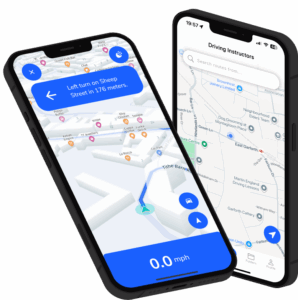

👉 Practise the Warwick Driving Test Routes with RouteBuddy!
20 FAQs About the Warwick Driving Test Routes
1. Where is the Warwick Test Centre located?
📍 Ground Floor, Wedgnock House, Wedgnock Lane, Warwick, CV34 5AP. The test centre is located just outside the town centre, offering quick access to both residential streets and busy main roads.
2. What types of roads will I encounter on the Warwick Driving Test Routes?
Expect a mix of:
- Residential streets with parked cars
- Busy main roads like the A429 and A46
- Multi-lane roundabouts
- Narrow lanes leading to rural roads
- Junctions in the town centre
3. What challenges are common on Warwick routes?
The main challenges include:
- Large, multi-lane roundabouts near the A46
- Sudden speed limit changes in residential areas
- Heavy traffic in and around the town centre
- Narrow rural lanes with limited visibility
4. What landmarks might I pass during the test?
You may drive past:
- Warwick Castle
- Warwick town centre
- The A46 junctions
- The River Avon
5. What are the typical speed limits on Warwick Driving Test Routes?
- 20–30 mph in residential and school zones
- 40 mph on main roads like A429
- 50–60 mph on A-roads and rural routes
Always keep an eye on the speed limit signs, as they can change quickly in urban areas.
6. What types of junctions will I encounter?
Expect:
- T-junctions in residential areas
- Mini-roundabouts on suburban roads
- Larger, multi-lane roundabouts on main roads
- Crossroads near the town centre
7. Are there difficult roundabouts on Warwick routes?
Yes, particularly around A46 and A429, where larger roundabouts with multiple lanes are common.
Read more: DVSA Roundabout Guidelines
8. What parking manoeuvres should I prepare for?
You may be asked to perform:
- Bay parking at the test centre
- Parallel parking on residential streets
- Pull up on the right
- Reverse into a side road
- Emergency stop
Read more: DVSA Manoeuvres
9. How should I handle busy roads in Warwick town centre?
Be prepared for:
Pedestrian crossings near shopping areas
Cyclists sharing the road
Buses stopping frequently
Sudden lane changes due to heavy traffic
Read more: DVSA Road Safety – Pedestrians & Cyclists
10. Are dual carriageways included in Warwick test routes?
Yes, sections of A46 and A429 are dual carriageways, requiring good lane discipline and safe overtaking.
11. Will I need to perform a manoeuvre during the test?
Yes, the examiner will ask for one of the following:
- Bay parking
- Parallel parking
- Pull up on the right
- Emergency stop
12. How long is the Warwick driving test?
The test lasts around 40 minutes, including independent driving and one manoeuvre.
13. Can I practise Warwick Driving Test Routes before my test?
Absolutely! RouteBuddy provides turn-by-turn navigation, helping you become familiar with the Warwick Driving Test Routes before test day.
14. How should I approach roundabouts on Warwick routes?
- Give way to traffic from the right
- Signal early to indicate your exit
- Stay in your lane throughout the roundabout
- Watch for cyclists and motorbikes
15. What common mistakes do learners make in Warwick?
Common errors include:
- Hesitating at busy roundabouts
- Lane drift on multi-lane roads
- Not checking mirrors when changing lanes
- Speeding on residential roads
16. What should I bring to the driving test?
Make sure to bring:
- Provisional licence
- Theory test pass certificate
- Glasses/contact lenses if required
- A roadworthy car with L-plates
17. How does the weather affect the Warwick routes?
Rain and fog can reduce visibility, especially on roundabouts.
Low sun can make driving on open roads more challenging, especially on dual carriageways.
18. How should I deal with cyclists, buses, and large vehicles?
- Give cyclists plenty of space when overtaking
- Be cautious when passing large vehicles
- Always check mirrors before changing lanes
- Only overtake when safe
19. What happens if I fail the Warwick driving test?
The examiner will provide feedback. Use RouteBuddy to focus on areas where you struggled and re-practise before rebooking your test.
20. How do I book or change my Warwick driving test?
Use the DVSA online booking service to book, reschedule, or cancel your test.
Sample Guide of the Warwick Driving Test Routes
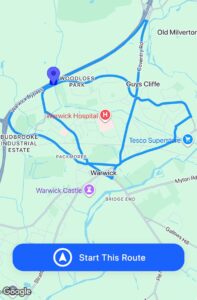
Leave the test centre on Wedgnock Lane → Primrose Hill
- Lane: Stay left.
- Speed Limit: 30 mph.
- Tip: Residential area; check mirrors and prepare for possible parked cars.
Turn onto Coventry Road → Warwick Bypass
- Lane: Keep centred.
- Speed Limit: 40 mph.
- Tip: Watch for merging traffic and adjust speed accordingly.
Travel along Birmingham Road → Saltisford → Priory Road
- Lane: Position correctly for junctions.
- Speed Limit: 30 mph.
- Tip: Be aware of pedestrians near busy areas.
Continue to Coventry Road → Spinney Hill → Greville Road
- Lane: Maintain lane discipline.
- Speed Limit: 30 mph.
- Tip: Residential roads; anticipate pedestrians and cyclists.
Turn onto Beauchamp Road → All Saints Road → Emscote Road
- Lane: Stay in the correct lane for turns.
- Speed Limit: 30 mph.
- Tip: Busy street; keep a safe distance from other vehicles.
Proceed along Coten End → St Nicholas Church Street → Castle Hill
- Lane: Follow road markings carefully.
- Speed Limit: 30 mph.
- Tip: Watch for emerging traffic at roundabouts.
Head onto The Butts → Cape Road → Upper Cape
- Lane: Position early for right turns.
- Speed Limit: 30 mph.
- Tip: Watch for parked cars and cyclists.
Return to Wedgnock Lane → Test Centre
- Lane: Position correctly for the final entrance.
- Speed Limit: 5–10 mph on site.
- Tip: Finish strong with clean, controlled parking.
Conclusion
The Warwick Driving Test Routes offer a mix of busy urban roads, multi-lane roundabouts, and rural lanes, testing your driving skills in various conditions. By practising with RouteBuddy, you can become more familiar with the routes, reduce test-day nerves, and improve your chances of passing on the first attempt.
Stay focused, stay calm, and keep practising!