

Sidcup Driving Test Centre sits in one of South East London’s most demanding driving environments. Busy A-roads, complex junctions, high pedestrian activity, and significant through-traffic from the Dartford Crossing area all combine to create a test that demands consistent confidence and sharp observation from start to finish.
If you are booked in at Sidcup, this guide covers everything you need to know. Pass rates, route types, the most common faults, and the most effective preparation strategies – all in one place.


Sidcup Driving Test Centre: The Key Facts
Where Is the Sidcup Driving Test Centre?
The Sidcup Driving Test Centre is located at Crayside, Five Arches Business Estate, 2 Maidstone Road, Sidcup, DA14 5AG. It sits on the eastern edge of Sidcup, close to the A20 Maidstone Road and within easy reach of several key road types that feature heavily on local test routes. The centre is accessible by car, and parking is available on site.
Confirm current opening times and slot availability through the official DVSA booking page on GOV.UK.
What Are the Opening Hours?
The Sidcup Driving Test Centre operates Monday to Friday, with tests running from early morning through to late afternoon. Slot availability changes regularly. Always check the DVSA booking page directly for the most current information.
How Do I Book a Test at Sidcup?
Book directly through the official DVSA booking page on GOV.UK. You will need your provisional driving licence number and your theory test pass certificate number to complete the booking.
Sidcup Driving Test Centre Pass Rate
According to the DVSA’s official driving test statistics, the national average pass rate for the UK practical driving test hovers around 50 percent. The Sidcup Driving Test Centre sits below this national average, reflecting the complexity of its surrounding road network rather than any difference in examiner standards.
As confirmed by the DVSA’s guidance on driving test marking, the criteria for minor, serious, and dangerous faults are identical at every test centre in Great Britain. The roads determine the difficulty, not the examiners.
Why Does the Pass Rate Matter?
Understanding Sidcup’s pass rate helps you calibrate your preparation. A below-average pass rate tells you the roads are genuinely demanding and that targeted, route-specific practice is essential rather than optional. It also tells you where to focus your lessons in the weeks leading up to your test.
How Does It Compare to Nearby Centres?
Sidcup sits among the more challenging test centres in South East London. Nearby centres in less congested areas tend to have higher pass rates. However, travelling to an unfamiliar test centre introduces its own risks. Knowing your local roads remains the strongest preparation strategy available.
Always check the most current figures at the DVSA’s official statistics page before making any decision.

Sidcup Driving Test Centre Routes: What to Expect
What Road Types Feature on Sidcup Test Routes?
Sidcup Driving Test Centre routes cover a varied and demanding mix of road types. Candidates can expect to encounter:
- The A20 Maidstone Road with high traffic volumes and multiple junctions
- The A2 and surrounding approach roads with faster-moving traffic
- Residential streets in Sidcup, Bexley, and Blackfen with parked vehicles and narrow sections
- Busy retail and commercial roads near Sidcup town centre
- Multi-lane roundabouts on the outer roads and ring junctions
- Roads connecting to the Dartford Crossing area with significant HGV and through-traffic volumes
Furthermore, the proximity of Sidcup to the Dartford Crossing means HGV and commuter traffic volumes are higher here than at many other South East London test centres. This creates a genuinely demanding driving environment throughout the test.
What Makes Sidcup Test Routes Distinctive?
Several features make Sidcup Driving Test Centre routes stand out from other South East London centres:
High through-traffic volumes – the A20 corridor carries significant traffic between London and Kent, meaning candidates face busier and faster road conditions than in many comparable areas.
Complex A-road junctions – the junctions on the A20 and A2 approach roads require confident observation, correct lane selection, and assertive decision-making throughout.
Residential street hazards – Sidcup and Blackfen residential streets feature parked vehicles, school zones, and narrow sections that demand precise positioning and consistent observation.
Dartford Crossing traffic – HGV volumes on surrounding roads are notably higher than at most test centres, requiring specific awareness when sharing road space with large vehicles.
Are There Dual Carriageways on Sidcup Test Routes?
Yes. Sections of the A2 and surrounding dual carriageway roads feature on several Sidcup Driving Test Centre routes. These sections require candidates to drive confidently at higher speeds, manage following distances correctly, and make assertive decisions when joining or leaving faster-moving traffic.
As the Highway Code confirms, safe driving on faster roads requires early hazard anticipation and correct lane positioning. Candidates unfamiliar with these specific sections can find the transition from residential street speeds particularly challenging under test pressure.
Most Common Faults at Sidcup Driving Test Centre
Based on the DVSA’s data on the most common driving test faults, the most common faults across all test centres include junction observation, mirror use, and road positioning. At Sidcup Driving Test Centre specifically, these areas create the most fault opportunities:
- Junction observation – emerging too early at busy A20 and residential street junctions
- Mirror use – failing to check adequately before lane changes on A2 and dual carriageway sections
- Roundabout positioning – incorrect lane choice on multi-lane outer road roundabouts
- Speed management – not adjusting speed promptly when transitioning between residential streets and faster A-road sections
- Positioning near HGVs – drifting too close or hesitating unnecessarily near large vehicles on the A20 corridor
Knowing these specific fault hotspots allows you to focus your preparation precisely where it matters most at Sidcup Driving Test Centre.
Tips to Pass at Sidcup Driving Test Centre
Tip 1: Practise the A20 and A2 Sections Specifically
The A20 Maidstone Road and A2 approach roads are the most demanding features of Sidcup Driving Test Centre routes. Practise these sections specifically, at the same time of day as your test slot, to get familiar with the traffic volumes and junction demands before test day.
Tip 2: Build Confidence Around HGVs
Sidcup’s proximity to the Dartford Crossing means HGV traffic is a regular feature on test routes. Practise driving alongside and behind large vehicles until it feels routine rather than unsettling.
Tip 3: Know the Residential Streets
Sidcup and Blackfen residential streets feature parked vehicles, school zones, and narrow sections. Practise precise positioning and consistent observation on these streets before your test, paying particular attention to speed management near parked vehicles.
Tip 4: Use RouteBuddy to Practise the Routes
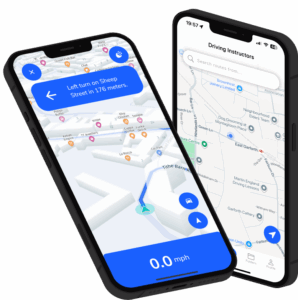
RouteBuddy gives learner drivers access to commonly used routes around test centres across the UK, including Sidcup. Turn-by-turn voice guidance mirrors the independent driving section of the test itself, so you practise following directions on the roads that matter most before test day.
Tip 5: Match Your Practice to Your Test Time
Traffic conditions around Sidcup Driving Test Centre change significantly throughout the day. If your test is at 9 am, practise on those roads at 9 am. The A20 during rush hour is a very different experience from the same road at midday.
How RouteBuddy Helps You Prepare for Sidcup
Familiarise Yourself With the Routes Before Test Day
RouteBuddy is a UK driving test preparation app built specifically for learner drivers. It gives you access to commonly used routes around test centres across the UK, including Sidcup. Rather than practising on random roads, you drive the junctions, roundabouts, and stretches of road most likely to feature on your test.
For Sidcup specifically, this means getting familiar with the A20 corridor, the A2 approach sections, the multi-lane roundabouts, and the residential streets in Sidcup and Blackfen before your test date. By the time test day arrives, those roads are already familiar.
Sat-Nav Simulation That Mirrors the Test
Since 2017, the independent driving section of the UK practical test has used a sat-nav for around 20 minutes. RouteBuddy mirrors this with turn-by-turn voice guidance through Sidcup Driving Test Centre routes. Following directions on unfamiliar roads becomes second nature before you sit in the examiner’s car.
Always Up to Date
Every route in the RouteBuddy app is kept current with the latest road layouts, speed limits, and traffic conditions. Therefore, what you practise closely reflects what you are likely to face on test day at Sidcup.
Download RouteBuddy on iOS and Android
RouteBuddy is available on the Apple App Store and Google Play. Visit RouteBuddy to find out more.
Sidcup Driving Test Centre: Frequently Asked Questions
Where is the Sidcup Driving Test Centre?
The Sidcup Driving Test Centre is located at Crayside, Five Arches Business Estate, 2 Maidstone Road, Sidcup, DA14 5AG.
Is Sidcup Driving Test Centre hard to pass?
Sidcup sits below the national average pass rate, reflecting the complexity of its surrounding road network. However, with targeted preparation on the routes before test day, a first-time pass is very much achievable for well-prepared learners.
What is the pass rate at Sidcup Driving Test Centre?
The pass rate at Sidcup Driving Test Centre sits below the national average of around 50 percent. For the most current figures, check the DVSA’s official statistics on GOV.UK directly.
How can I practise Sidcup Driving Test Centre routes?
The most effective method is to drive the commonly used routes around the test centre before your test date. RouteBuddy gives you access to those routes, with turn-by-turn voice guidance, so you can rehearse specific junctions and roads before test day.
What are the most common faults at Sidcup Driving Test Centre?
Junction observation, mirror use before lane changes, and roundabout positioning are the most common fault areas at Sidcup, based on DVSA national fault data.
Are there easier test centres near Sidcup?
Nearby centres in less congested areas of Kent and South East London tend to have higher pass rates. However, travelling to an unfamiliar test centre introduces its own risks. Always check the most current pass rate figures at the DVSA’s official statistics page before making any decision.
Practical Steps Before Your Sidcup Test
Before You Book Your Test Slot
- Check the latest pass rate data at the DVSA’s official statistics page
- Review the Highway Code for junctions, dual carriageways, and roundabouts at the official Highway Code on GOV.UK
- Download RouteBuddy and familiarise yourself with Sidcup Driving Test Centre routes before test day
In the Weeks Leading Up to Your Test
- Practise the sat-nav section using RouteBuddy so following directions becomes automatic
- Focus on A20 and A2 confidence and HGV awareness on every practice drive around Sidcup
- Do a full mock test on the most common routes with no prompting and in full test conditions
On Test Day
- Arrive early at Crayside, Five Arches Business Estate, Maidstone Road, Sidcup and give yourself time to settle before your slot
- Prepare your documents the night before so test morning is calm and unhurried
The Bottom Line
Sidcup Driving Test Centre is a genuinely challenging test environment. The A20 corridor, dual-carriageway sections, HGV traffic, and complex junctions combine to create a test that quickly exposes underprepared candidates. However, for those who have driven these roads before test day, none of those features come as a surprise.
Knowing the routes, understanding the specific hazards, and being familiar with the road layout makes all the difference. With RouteBuddy in your preparation toolkit, Sidcup Test Centre stops being something to worry about and starts being something you are fully ready for.