

Cambridge is one of the most unique test environments in the UK. Narrow historic streets, an unusually high volume of cyclists, complex one-way systems, and busy city centre junctions all combine to create a driving test experience that catches many underprepared learners off guard. If you are booked in for your practical test at the Cambridge driving test centre, understanding the Cambridge driving test routes before test day is one of the smartest preparations you can make. This guide answers the ten most common questions learners ask, so you walk in knowing exactly what is ahead.

10 FAQs About Cambridge Driving Test Routes
1. Where Is the Cambridge Driving Test Centre?
The Cambridge driving test centre is located at Units A & B, Brookmount Court, Kirkwood Road, Cambridge, CB4 2QH. It sits in the northern part of the city, close to the Arbury and Kings Hedges residential areas. The centre is accessible by car, and parking is available nearby.
As with all DVSA test centres, the easiest way to confirm current opening times and slot availability is through the official DVSA booking page
2. What Makes Cambridge Driving Test Routes So Challenging?
Cambridge driving test routes are widely regarded as among the more demanding in the East of England. The combination of factors that make them difficult includes:
- High cyclist density – Cambridge has one of the highest cycling rates in the UK. Candidates must maintain constant awareness of cyclists at junctions, roundabouts, and on shared road sections throughout the test
- Narrow historic streets – the city centre and surrounding areas include several narrow roads where passing oncoming vehicles requires precise positioning
- Complex one-way systems – the city centre features one-way streets and bus-only zones that require clear planning and lane discipline
- Busy pedestrian crossings – with a large student population and significant foot traffic, pedestrian crossings feature heavily on Cambridge driving test routes
Consequently, learners who have not specifically practised the roads around the test centre are at a significant disadvantage on test day.
3. What Is the Pass Rate at the Cambridge Driving Test Centre?
The pass rate at the Cambridge driving test centre sits broadly around the national average, though it fluctuates year on year. According to the DVSA’s official driving test statistics, the national average for the UK practical driving test hovers around 50 percent. Cambridge performs broadly in line with this figure.
For the most current and accurate pass rate data, always check the DVSA’s official statistics directly rather than relying on any fixed figure, as these change regularly.
4. What Road Types Feature on Cambridge Driving Test Routes?
Cambridge driving test routes typically cover a varied mix of road types, including:
- Residential streets in the Arbury, Kings Hedges, and Chesterton areas
- Busier A-roads including sections of the A1134 and A10 on the city’s northern and eastern edges
- City centre roads with one-way systems, bus lanes, and shared cycling infrastructure
- Retail and commercial areas with high pedestrian and cyclist activity
- Roundabouts on the ring road and outer residential areas
Furthermore, the presence of cycling lanes and shared road markings throughout Cambridge means lane positioning requires more attention here than at many other test centres.
5. How Does the Cyclist Situation Affect Cambridge Driving Test Routes?
This is one of the most important questions any Cambridge learner can ask. Cambridge has one of the highest proportions of cyclists per capita of any city in the UK. On Cambridge driving test routes, you will almost certainly encounter cyclists at junctions, on roundabouts, filtering through traffic, and on shared road sections.
As the Highway Code confirms, drivers must give cyclists appropriate space and priority in several situations. Failing to do so on a driving test results in a serious or dangerous fault. Therefore, practising specifically on the roads around the Cambridge test centre, where cyclist traffic is heaviest, is essential preparation.


6. Are There One-Way Streets on Cambridge Driving Test Routes?
Yes. One-way systems feature on several Cambridge driving test routes, particularly in and around the city centre. Entering a one-way street incorrectly or positioning in the wrong lane within a one-way system is a common source of serious faults for candidates unfamiliar with the local road layout.
Moreover, Cambridge has several roads that are accessible to cyclists travelling in both directions even within one-way systems, which adds layer of observation required from candidates. Knowing where these roads are before your test removes one of the most common sources of hesitation and error.
7. What Are the Most Common Faults on Cambridge Driving Test Routes?
Based on the DVSA’s national fault data, the most common faults across all test centres consistently include junction observation, mirror use, and road positioning. At Cambridge specifically, the road network creates additional fault opportunities in the following areas:
- Cyclist observation – failing to check for cyclists before turning, changing lanes, or opening space at junctions
- One-way street positioning – choosing the wrong lane on approach or within a one-way system
- Pedestrian crossing responses – hesitating or misjudging when to give way at busy crossings near the city centre
- Roundabout lane discipline – particularly at busier ring road roundabouts where multiple lanes converge
Knowing these specific fault hotspots in advance allows you to focus your preparation exactly where it matters most on Cambridge driving test routes.
8. How Can I Practise Cambridge Driving Test Routes?
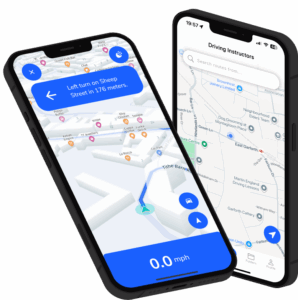
The most effective preparation is to drive the roads most commonly used around the Cambridge driving test centre before your test date. RouteBuddy gives learner drivers access to commonly used routes around test centres across the UK, including Cambridge, with turn-by-turn voice guidance that mirrors the independent driving section of the test itself.
Practising the sat-nav section using RouteBuddy to simulate your test routes helps following directions become automatic. Every route in the app is kept up to date with current road layouts and speed limits, so what you practise accurately reflects what you will face on test day.
9. Are There Easier Test Centres Near Cambridge?
If you are considering nearby alternatives, it is worth knowing that pass rates vary across the East of England. Some surrounding test centres in smaller towns tend to have higher pass rates than Cambridge, due to simpler road networks with fewer cyclists and less complex junctions.
However, choosing a test centre in a different town solely for its pass rate comes with its own risks. You will still need to know those specific roads. Pass rates fluctuate year on year, so always check the most current figures at the DVSA’s official statistics page before making a decision.
10. What Should I Do the Week Before My Cambridge Driving Test?
The week before your test is your most valuable preparation window. Here is how to use it well on Cambridge driving test routes:
- Drive the most common routes around the Cambridge driving test centre using RouteBuddy, paying close attention to cyclist hotspots, one-way systems, and busy junctions
- Focus on cyclist awareness specifically, since this is the most Cambridge-specific challenge on test day
- Review the Highway Code for cyclists, pedestrian crossings, and one-way streets at the official Highway Code page.
- Do a full mock test with your instructor on the routes, with no prompting and in full test conditions
- Practise at the same time of day as your actual test slot, since cyclist and pedestrian traffic patterns change throughout the day
- Prepare your documents the night before so test morning is calm and unhurried
How RouteBuddy Helps You Prepare for Cambridge Driving Test Routes
Familiarise Yourself With the Routes Before Test Day
RouteBuddy is a UK driving test preparation app built specifically for learner drivers. It gives you access to commonly used routes around test centres across the UK, including Cambridge. Rather than practising on random roads, you drive the junctions, roundabouts, and stretches of road most likely to feature on your test.
For Cambridge specifically, this means getting familiar with the cyclist-heavy roads, the one-way systems, and the busier A-road sections around the city before your test date. By the time test day arrives, those roads are already familiar.
Sat-Nav Simulation That Mirrors the Test
Since 2017, the independent driving section of the UK practical test has used a sat-nav for around 20 minutes.RouteBuddy mirrors this experience. Turn-by-turn voice guidance walks you through the Cambridge driving test routes so that following directions on unfamiliar roads becomes second nature before you sit in the examiner’s car.
Always Up to Date
Every route in the RouteBuddy app is kept current with the latest road layouts, speed limits, and traffic conditions. Therefore, what you practise on RouteBuddy accurately reflects what you are likely to face on test day at Cambridge.
Download RouteBuddy on iOS and Android
RouteBuddy is available on the Apple App Store and Google Play. Whether you are an iPhone or Android user, you can start preparing for your Cambridge driving test today. Visit routebuddy.co.uk to find out more.
Practical Steps Before Your Cambridge Test
- Download RouteBuddy and familiarise yourself with the Cambridge driving test routes before test day
- Practise the sat-nav section using RouteBuddy to simulate your test routes so following directions becomes automatic
- Focus on cyclist awareness on every practice drive around Cambridge
- Check the latest pass rate data at the DVSA’s official statistics page
- Review the Highway Code for cyclists, one-way streets, and pedestrian crossings at the official Highway Code
- Do a full mock test on the most common routes with no prompting and in full test conditions
- Arrive early at Cowley Road and give yourself time to settle before your slot
The Bottom Line
Cambridge driving test routes are challenging, but they are not impossible. The cyclist density, one-way systems, and city centre complexity catch out learners who arrive underprepared. However, for those who have driven these roads before test day, none of those features come as a surprise.
Knowing the routes, understanding the specific hazards, and being familiar with the road layout makes all the difference. With the right preparation behind you, Cambridge driving test routes stop being something to fear and start being something you are ready for.