
When you’re preparing for your driving test, one of the most common questions you might ask is: “What do you need to take on your driving test?” It’s an important question because knowing exactly what you need helps you feel more confident and organised on the big day.
In this guide, we’ll go through everything you need to bring with you on your driving test, as well as some practical tips on how to prepare. We’ll also explain how tools like RouteBuddy can help you get ready for the test itself. So, let’s dive right in!

Essential Documents for Your Driving Test
1. Provisional Driving Licence
The most important thing to bring with you on your driving test is your provisional driving licence. You’ll need it to prove that you are the person who is taking the test and that you’ve passed the theory test.
According to the DVSA, the provisional licence must be shown to the examiner when you arrive at the test centre. If you don’t have it, you won’t be allowed to take the test. For full details, see the DVSA guidelines on what you need to take.
2. Theory Test Pass Certificate
If you’re booking your driving test after passing the theory test, you’ll also need to bring your theory test pass certificate. This proves that you’ve passed the written theory test before moving on to the practical part. The DVSA requires this to confirm your eligibility for the practical exam.
The certificate should be presented alongside your provisional licence when you check in at the test centre. For further information, check the official theory test page.
What Else Do You Need to Bring?
3. A Roadworthy Car
If you’re taking the test in your own car, the vehicle must be roadworthy and meet certain requirements. This means your car must have all necessary documents, such as insurance and an MOT (if required), and meet the legal safety standards.
The DVSA also states that the car must have L plates (learner plates) on the front and rear. The examiner needs to be able to easily identify you as a learner driver.
If you’re unsure about whether your car meets the DVSA’s requirements, check the official vehicle requirements.
4. Glasses or Contact Lenses (If You Need Them)
If you wear glasses or contact lenses to meet the test’s vision standard, make sure to bring them with you. The examiner will ask you to read a number plate from a distance as part of the eyesight test before you even begin driving.
The DVSA’s vision test will check if you meet the minimum standard of reading a number plate from 20.5 metres away. If you normally wear corrective lenses, you must have them for the test. If you forget them, you won’t be allowed to take the test.
How to Prepare for Your Driving Test
1. Check Your Documents Ahead of Time
One of the easiest ways to reduce stress on the day of your driving test is to check all your documents the night before. Make sure you have your provisional licence and theory test pass certificate packed, along with any other documents that might be required.
It’s also worth double-checking that your car is in good condition and that you’ve included everything you need. If you’ve arranged to use your instructor’s car, check with them to ensure it’s ready for the test.
2. Get Familiar with Your Test Route
You can never be fully prepared for a driving test unless you’ve practised on the actual test routes. This is where RouteBuddy comes in.
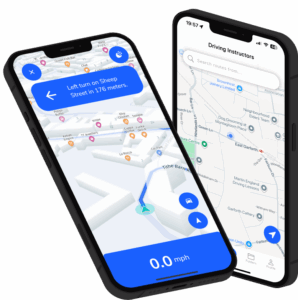
RouteBuddy is an app that helps you practise real driving test routes used by examiners. It provides turn-by-turn navigation on your phone, guiding you through the exact roads you’ll face during your driving test. This helps you build confidence by getting familiar with the route, so you know exactly what to expect.
Other Helpful Items to Bring on Test Day
3. Comfortable Clothing and Footwear
You should dress comfortably for your driving test. There’s no official rule on what you can wear, but wear something that allows you to move freely while driving.
If you’re wearing shoes with thick soles or heels, they might make it difficult to press the pedals. Comfortable, flat shoes are best for driving. Avoid sandals or flip-flops, as they may not provide enough control over the pedals.
4. A Positive Attitude
While not a physical item, your mindset can play a huge role in how well you perform during your driving test. Going in with a positive attitude and focusing on staying calm will help you avoid unnecessary mistakes.
The DVSA recommends staying calm and concentrating fully on the road during the test. You may be nervous, but it’s important to focus on your skills rather than worrying about the result.
What to Avoid Bringing
1. Your Phone
The DVSA explicitly states that phones are not allowed in the car during the test. Not only can it be distracting, but it could also result in a disqualification. If you need your phone for navigation, make sure it’s in a holder and not distracting you from the task at hand.
2. A Companion (Unless Approved)
You cannot bring a friend or family member in the car during the test unless they are your instructor or the test is a special arrangement (such as a medical test). This is to prevent distractions and ensure you are fully focused on the task.
How RouteBuddy Can Help You Prepare for Your Driving Test
It’s clear that preparation is key to passing your driving test with flying colours. Alongside ensuring you have all your documents and materials ready, RouteBuddy is a game-changing tool for learners.
Why RouteBuddy Helps
- Real test routes: RouteBuddy lets you practise the exact routes used during the driving test. This means no surprises on test day.
- Navigation: It’s like a sat-nav, but specifically designed for driving tests. You can follow the exact routes your examiner will choose.
- Confidence: By practising on real roads, you’ll become more confident in your ability to handle tricky junctions, roundabouts, and other test areas.
- Save money: You don’t need to book extra lessons to drive the test routes—you can practise them independently with RouteBuddy.
When you’re asking, “What do you need to take on your driving test?” the answer isn’t just your licence and theory test certificate. It’s about being prepared, both mentally and physically, for the challenge ahead. RouteBuddy helps you get there with the confidence you need to pass.
Quick FAQs on What You Need to Take on Your Driving Test
What documents do I need to bring?
- Provisional licence
- Theory test pass certificate
Can I bring my own car?
Yes, as long as it’s roadworthy and meets DVSA requirements.
Can I wear any shoes?
Comfortable shoes that allow full control of the pedals are best.
Can I bring my phone?
No, phones must be left out of reach unless in an official holder for navigation.
Final Thoughts
Understanding what you need to take on your driving test is one of the most important parts of your preparation. Knowing the required documents, the car’s condition, and the practical items to bring will help you feel organised and ready. And with RouteBuddy, you can make sure you’re well-prepared with realistic practice on the actual test routes.
By following these guidelines and staying calm on the day, you’ll be on your way to passing your driving test confidently.