

Not all driving tests are created equal. Two learners with the same ability, the same number of lessons, and the same instructor can sit their practical test on the same day and get very different results. The reason? The hardest test centres in the UK put candidates through road conditions that are genuinely more demanding than anywhere else in the country.
Understanding which test centres have the lowest pass rates, and why, is a crucial part of UK driving test practice. It tells you what is coming, where to focus your preparation, and how to remove the element of surprise that catches so many capable drivers out on test day.

Why Are Some Test Centres So Much Harder Than Others?
It Comes Down to the Roads, Not the Examiners
Before we get into the list, it is worth being clear on one thing. Examiners at every test centre in the UK follow the same standardised marking criteria set by the DVSA. As confirmed by the DVSA’s official guidance on what happens during your driving test, the thresholds for minor, serious, and dangerous faults are identical across Great Britain.
In other words, the difference in pass rates is not about stricter examiners. It is entirely about the roads themselves.
Urban Roads Create More Opportunities to Fail
Dense urban road networks generate more hazards per mile than quiet suburban or rural routes. More hazards mean more decisions, and more decisions mean more chances to pick up a fault. As a result, a candidate driving through a complex city centre junction for the first time, under test pressure, is far more likely to hesitate or misjudge than someone on a familiar, quieter road.
According to the DVSA’s driving test statistics, the gap between the highest and lowest performing test centres in Great Britain can be as wide as 40 percentage points. That is a significant difference, and it is almost entirely explained by road complexity.
The 5 Hardest Test Centres in the UK
1. Belvedere, South East London
Belvedere consistently ranks among the hardest test centres in the UK, with pass rates that have historically dipped below 30 percent. Located in the London Borough of Bexley, the test routes here involve dense suburban traffic, complex junctions, and a road network that offers very little breathing room for learners.
Candidates at Belvedere regularly face:
- Heavy traffic on the A206 and surrounding A-roads
- Multiple complex junctions with poor sightlines
- Busy pedestrian crossings and bus routes throughout the route
- High volumes of HGV traffic from nearby industrial areas
For anyone testing here, route-specific preparation is not optional. It is, quite simply, essential.
2. Erith, South East London
Erith sits just a few miles from Belvedere and shares many of the same characteristics. Its pass rate has consistently remained well below the national average of 47 to 49 percent, making it one of the hardest test centres in the UK year after year.
The challenge at Erith comes from a combination of factors:
- Narrow residential streets with parked cars on both sides
- Busy A-road junctions with fast-moving traffic
- Limited visibility at several key junctions on common test routes
- The proximity to the Dartford Crossing area, which brings significant through-traffic
Consequently, learners preparing for Erith need to spend serious time on the specific roads the examiner will use. General driving practice on familiar roads simply is not enough.
3. Coventry City Centre, West Midlands
Coventry presents a different kind of challenge from the London centres. Rather than narrow suburban streets, the difficulty here stems from the city’s complex ring road system and the high volume of traffic flowing through the city centre at almost all hours.
Test routes from Coventry city centre regularly include:
- Sections of the Coventry ring road, one of the most complex urban road systems in England
- Multi-lane roundabouts requiring precise lane discipline
- Busy pedestrian zones and shared road spaces
- Frequent bus and taxi traffic creating unpredictable hazards
The Highway Code guidance on roundabouts is clear on lane discipline, but applying those rules confidently on an unfamiliar multi-lane roundabout under test pressure is a different skill entirely. Therefore, knowing the route in advance makes a significant difference here.
4. Birmingham (Kings Heath), West Midlands
Birmingham Kings Heath is another of the hardest test centres in the UK, and for good reason. The routes here cover some of the busiest and most complex roads in the West Midlands, with a road network that demands consistent observation, precise positioning, and calm decision-making throughout.
Common challenges on Kings Heath test routes include:
- High-traffic A-roads with frequent lane changes required
- Multiple roundabouts in quick succession on some routes
- Busy retail areas with high pedestrian activity
- School zones and residential streets with frequent hazards
Furthermore, pass rates at Kings Heath have historically sat notably below the national average, and the DVSA data supports what local instructors have long known: this is not a forgiving test centre.
5. Gillingham, Kent
Gillingham rounds out the list as one of the most consistently challenging test centres outside of London and the West Midlands. Located in the Medway towns area of Kent, Gillingham’s pass rate has remained stubbornly below the national average for a number of years.
The routes here present a specific set of difficulties:
- The busy A2 and surrounding A-roads feature heavily on many test routes
- Complex town centre junctions with multiple lanes and heavy traffic
- Frequent roadworks and changing road layouts in the Medway regeneration areas
- High volumes of commuter traffic, particularly during morning test slots


What the Hardest Test Centres Have in Common
Looking across all five of the hardest test centres in the UK, a clear pattern emerges. Without exception, every one of them shares the following characteristics:
- Dense urban or suburban road networks with high traffic volumes
- Multiple complex junctions, roundabouts, or ring road sections on test routes
- Limited margin for error due to busy roads and fast-moving traffic
- Road layouts that are unfamiliar and demanding for learners who have not specifically practised on them
Moreover, the DVSA’s data on the most common test faults consistently shows that junctions, mirrors, and road positioning are the top causes of failure across Great Britain. At the hardest test centres, candidates encounter more of these fault opportunities in a single 40-minute test than candidates at easier centres might face in two.
How to Beat the Hardest Test Centres in the UK
Know the Routes Before You Sit
The single most effective thing you can do when preparing for one of the hardest test centres in the UK is to drive the actual test routes before your test date. Not roads nearby. Not similar roads. The exact junctions, roundabouts, and stretches of road the examiner is likely to take you on.
Once you have driven a junction before, it stops being a surprise. The sightlines are familiar, the traffic patterns make sense, and you know how early to position. As a result, what might have been a potential serious fault becomes a routine manoeuvre.
Use RouteBuddy to Simulate the Real Test
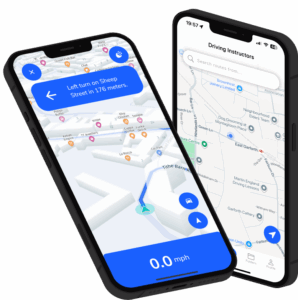
RouteBuddy is built specifically for this. The app gives learners across the UK access to the real routes used by DVSA examiners at test centres nationwide, including the hardest test centres in the UK. Turn-by-turn voice guidance mirrors the sat-nav section of the actual test, so you practise following directions on the roads that matter most.
For candidates testing at Belvedere, Erith, Coventry, Birmingham, or Gillingham, RouteBuddy is not just useful. It is one of the most targeted preparation tools available.
Practise at the Right Time of Day
If your test is booked for 9 am, practise on those roads at 9 am. Similarly, if it is a 2 pm slot, practise at 2 pm. Traffic conditions change significantly throughout the day, and the challenge of a particular junction at rush hour is very different from the same junction on a quiet Tuesday afternoon. Always match your practice to your actual test conditions.
Focus Your Lessons on the Specific Fault Types
Use the DVSA’s fault data for your test centre to identify what most commonly fails candidates there. Then ask your instructor to focus your remaining lessons on those specific scenarios rather than general practice.
Practical Steps Before Your Test
- Download RouteBuddy and drive your test centre’s routes before test day
- Practise the sat-nav section using RouteBuddy to simulate your real test routes so following directions becomes automatic
- Check your test centre’s pass rate at the DVSA’s official statistics page
- Review the Highway Code for junctions, roundabouts, and road positioning at GOV.UK
- Complete at least one full mock test on the real routes with your instructor, with no prompting
- Practise at the same time of day as your actual test slot
The Bottom Line: Hardest Test Centres
The hardest test centres in the UK are hard for a reason. The roads are demanding, the traffic is heavy, and the margin for error is small. However, none of that changes the fact that thousands of people pass at these centres every year.
Those candidates pass because they prepared specifically for those roads. They had driven the routes, knew the junctions, and walked in feeling familiar rather than frightened.
Ultimately, that is the difference between passing and failing at the hardest test centres in the UK. Preparation beats talent every single time.