
Driving around Exeter, especially in the Marsh Barton area, gives learners a challenging mix of urban roads, rural lanes, busy roundabouts, and fast-moving A-roads. The Driving Test Routes Exeter are designed to test your observation skills, lane discipline, and ability to handle unpredictable traffic conditions. This guide answers 20 essential FAQs specific to the Exeter Test Centre, helping you prepare more effectively.
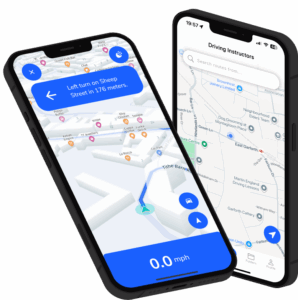

👉 Practise the Driving Test Routes Exeter with RouteBuddy!
20 FAQs About the Driving Test Routes Exeter
1. Where is the Exeter Test Centre located?
📍 Thorverton Road, Marsh Barton, Exeter, EX2 8FS. Located in an industrial area, the test often begins with quieter estate roads before heading into busier parts of Exeter.
2. What types of roads will I drive on during the test?
Expect:
- Residential areas near Alphington
- Industrial roads around Marsh Barton
- Rural lanes on the outskirts of Exeter
- Busy A-roads such as the A379 and A30
- Multi-lane roundabouts
3. What are the main challenges on Driving Test Routes Exeter?
Learners often find difficulty with:
- Large, busy roundabouts
- Narrow rural lanes with blind bends
- Traffic-heavy areas near Alphington Road
- Sudden speed limit changes
4. What landmarks might I encounter during the test?
Common areas include:
- Alphington Road retail area
- Matford roundabout
- Marsh Barton industrial estate
- Cowick Lane and Exwick routes
5. What are the typical speed limits on the Exeter routes?
- 20–30 mph in residential areas
- 40 mph on link roads
- 50–60 mph on A-roads and rural stretches
Always watch for changing limits. Exeter has many transitional zones.
6. What junctions will I face on the test?
Expect:
- Mini-roundabouts in residential areas
- Large multi-lane roundabouts on main routes
- Tight T-junctions in rural areas
- Busy crossroads near Alphington
7. Are there difficult roundabouts in Exeter?
Yes, especially Matford Roundabout, which is large and fast-moving.
Read more: DVSA Roundabout Guidelines
8. What parking challenges should I practise for?
You may be asked to handle:
- Bay parking at the test centre
- Parallel parking on quiet residential roads
- Manoeuvring around parked vans in Marsh Barton
Read more: DVSA Manoeuvres
9. How should I handle traffic-heavy areas like Alphington Road?
Be prepared for:
- Frequent stop-start traffic
- Pedestrians crossing unexpectedly
- Buses pulling out
- Cyclists filtering through gaps
Read more: DVSA Road Safety – Pedestrians & Cyclists
10. Are dual carriageways part of the Exeter test?
Yes, sections of the A30, A379, and A38 may appear on some routes.
11. Will I have to complete manoeuvres?
Yes, the examiner will ask for one of the following:
- Bay parking
- Parallel parking
- Pull up on the right
- Reverse into a side road
- Emergency stop
12. How long is the Exeter driving test?
The test lasts around 40 minutes, including 20 minutes of independent driving.
13. Can I practise Driving Test Routes Exeter in advance?
Absolutely! And it’s recommended.
Use RouteBuddy to practise the Driving Test Routes Exeter with turn-by-turn guidance before your test.
14. How should I approach Exeter roundabouts?
- Give way to the right
- Pick the correct lane early
- Keep a steady speed
- Signal clearly for your exit
15. What are the most common mistakes in Exeter?
Typical faults include:
- Hesitating too long at busy roundabouts
- Over-speeding on rural roads
- Late lane changes on the A-roads
- Missed mirror checks on complex junctions
16. What should I bring for the test?
Bring:
- Provisional licence
- Theory test pass certificate
- Glasses/contact lenses if required
- A safe, fully insured car with L-plates
17. How does the weather impact the Driving Test Routes Exeter?
Exeter’s rural roads can become muddy or slippery in the rain. Fog and low sun can affect visibility on A-roads.
18. How do I deal with tractors or cyclists on rural stretches?
- Stay patient
- Do not overtake unless fully safe
- Give plenty of space
- Check mirrors frequently
19. What happens if I fail the Exeter driving test?
The examiner will explain your faults. Use RouteBuddy to revisit those problematic areas and improve before retaking.
20. How do I book or change a driving test in Exeter?
Use the DVSA online booking service to book, reschedule, or cancel your test.
Sample Guide of the Driving Test Routes Exeter
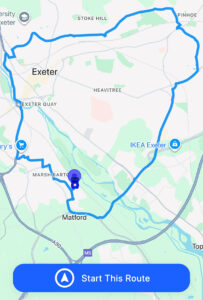
- Starting Point: Exeter Driving Test Centre
- Location: Thorverton Road, Marsh Barton, Exeter, EX2 8FS
1. Leave Thorverton Road → Silverton Road → Yeoford Way
- Lane: Keep left throughout.
- Speed Limit: 30 mph.
- Tip: Industrial traffic can appear suddenly — strong mirror use helps.
2. Follow Matford Way → Bad Homburg Way → A379
- Lane: Stay in the left lane when joining the A379.
- Speed Limit: 30 mph rising to 50 mph.
- Tip: Match dual-carriageway speed smoothly without harsh acceleration.
3. Continue via Bridge Road → Countess Wear Roundabout → Rydon Lane
- Lane: Select the correct roundabout lane early.
- Speed Limit: 30–40 mph.
- Tip: This section gets busy — anticipate merging traffic.
4. Travel through Middlemoor Roundabout → Hill Barton Road → Honiton Road
- Lane: Keep left unless signs direct otherwise.
- Speed Limit: 30–40 mph.
- Tip: Expect buses and pedestrians near residential areas.
5. Follow Ambassador Drive → Cumberland Way → Pinhoe Road
- Lane: Maintain a centred lane position.
- Speed Limit: 30 mph.
- Tip: Several school zones — be ready for lower speed changes.
6. Head through Venny Bridge → Chancel Lane → Beacon Heath → Beacon Lane
- Lane: Stay left with smooth positioning through bends.
- Speed Limit: 20–30 mph.
- Tip: Narrow residential sections require calm steering and spacing.
7. Continue via Calthorpe Road → Prince Charles Road → Union Road
- Lane: Keep to the left.
- Speed Limit: 30 mph.
- Tip: Hill gradients test clutch control — prepare early.
8. Travel down Prince of Wales Road → Streatham Drive → New North Road
- Lane: Hold your lane near campus areas.
- Speed Limit: 20–30 mph.
- Tip: Students cross unpredictably — look well ahead.
9. Head along Howell Road → St Davids Hill → Bonhay Road
- Lane: Keep left on all approaches.
- Speed Limit: 30 mph.
- Tip: Increased station traffic — maintain a safe distance.
10. Move through Edmund Street → Exe Bridge South → Alphington Street
- Lane: Choose the correct roundabout lane early.
- Speed Limit: 20–30 mph.
- Tip: Multiple exits make observations crucial.
11. Follow Alphington Road → Marsh Green Road West → Grace Road West
- Lane: Maintain lane discipline through industrial areas.
- Speed Limit: 30 mph.
- Tip: Expect large vehicles to reverse or turn unexpectedly.
12. Continue via Trusham Road → Alphin Brook Road → Hennock Road Central & East
- Lane: Stay in your lane on all bends.
- Speed Limit: 30 mph.
- Tip: Road surfaces vary — adjust speed smoothly.
13. Return to Silverton Road → Thorverton Road → Test Centre
- Lane: Keep left and prepare for the final entry.
- Speed Limit: 5–10 mph inside the test centre grounds.
- Tip: Finish with a calm, controlled parking manoeuvre.
Conclusion: Ready to Conquer the Driving Test Routes Exeter?
The Driving Test Routes Exeter provide a realistic mix of industrial, rural, and city driving, helping learners build confidence and adaptability. With consistent practice and route familiarity, especially through RouteBuddy, you’ll be better prepared to handle Exeter’s diverse road conditions on test day.
Keep practising! Every mile builds confidence.