

Every year, hundreds of thousands of learner drivers sit the UK practical driving test and walk away without a pass. Most of them are not bad drivers. Most of them are drivers who fell into one of the same predictable traps that catch learners out on test after test, year after year. The DVSA publishes official data on the top 10 reasons for failing the driving test in the UK. That data is one of the most valuable resources any learner can use before test day. It tells you exactly where the fault lines are, which moments in a test carry the highest risk, and where your preparation needs to be sharpest.
This article breaks down every one of those ten reasons, explains why each one happens, and shows you what you can do to make sure none of them appears on your scoresheet.

The Official Top 10 Reasons for Failing the Driving Test
According to the DVSA’s official fault data on GOV.UK, the following fault categories account for the majority of test failures across Great Britain every year.
1. Junctions: Observation
Junction observation is the single most common reason for failing the driving test in the UK, accounting for more failures than any other fault category. Candidates emerge from junctions without adequate observation, either pulling out without checking properly or not waiting for a safe enough gap in traffic.
The fix is not just checking but checking visibly and thoroughly. Examiners watch your head movement. A subtle glance is not enough. Turn your head clearly in both directions, assess the gap, and only emerge when you are genuinely certain it is safe. Furthermore, practising the specific junctions on your test route before test day means you already know the sightlines, the traffic patterns, and how long to wait.
2. Mirrors: Change Direction
Failing to use mirrors correctly before changing direction is the second most common reason for failing the driving test in the UK. This includes not checking mirrors before turning, changing lanes, or pulling out. It also includes checking mirrors but not doing so clearly enough for the examiner to observe.
The mirror, signal, manoeuvre routine must be applied consistently and visibly throughout the entire test. Moreover, the checks must happen in the correct sequence and at the correct time. Practising this routine until it becomes automatic on every manoeuvre is the most effective way to eliminate this fault.
3. Control: Steering
Steering faults are the third most common reason for failing the driving test in the UK. These include turning too early or too late, making wide turns that cross lane markings, and losing accurate vehicle positioning through bends and junctions.
Steering faults typically reflect a lack of familiarity with specific road geometries. Knowing how tight a particular corner is, how wide a junction entrance is, and where to position on approach all come from having driven those roads before. Consequently, route-specific practice is one of the most direct ways to reduce steering faults.
4. Junctions: Turning Right
Turning right incorrectly is the fourth most common reason for failing the driving test. Faults here include incorrect positioning on approach, poor observation before turning, cutting the corner, and not waiting safely for a clear gap in oncoming traffic.
Right turns are among the most complex manoeuvres in everyday driving. They involve positioning, observation in multiple directions, speed management, and timing all at once. Therefore, practising right turns specifically on the junctions your examiner will use is essential preparation before test day.
5. Mirrors: Change Speed
Failing to check mirrors before changing speed is the fifth most common reason for failing the driving test in the UK. Many candidates focus their mirror checks on direction changes but forget that slowing down, speeding up, or braking also require a mirror check first.
This fault is often invisible to the candidate because it happens during moments of focus on something else, such as a pedestrian crossing or a junction ahead. Building the habit of checking mirrors before every speed change, not just every direction change, is the specific adjustment needed to eliminate this fault.


6. Move Away: Safety
Not moving away safely is the sixth most common reason for failing the driving test. This covers moving off from the side of the road, from junctions, and from manoeuvre positions without adequate observation, particularly the blind spot check over the right shoulder before pulling out.
This fault often catches nervous learners because moving away feels routine after months of practice. Under test pressure, the blind spot check gets abbreviated or skipped entirely. Practising a deliberate, visible blind spot check on every single pull-away during your preparation embeds the habit before it matters.
7. Response to Signs and Road Markings
Failing to respond correctly to traffic signs and road markings is the seventh most common reason for failing the driving test in the UK. This includes missing speed limit changes, failing to obey give way markings, and not responding correctly to lane markings at junctions and roundabouts.
Signs and markings are encountered throughout the entire test without warning. The only way to guarantee correct responses is to know the roads. When you have driven a particular junction before, you already know the give way line is there. You already know the speed limit changes at a specific point. In addition, reviewing the official Highway Code on GOV.UK before your test reinforces the rules so they are instinctive on the day.
8. Move Away: Control
Moving away without adequate vehicle control is the eighth most common reason for failing the driving test. This includes stalling when pulling away, rolling back on a hill start, or moving away jerkily in a way that suggests poor clutch and accelerator coordination.
This fault is almost always linked to nerves. The physical skills are there from months of lessons. However, under test pressure, candidates rush the move away and lose the smooth coordination they have been practising. Slowing down mentally and treating each pull-away as a deliberate action rather than a rushed one is the most effective remedy.
9. Positioning: Normal Driving
Incorrect positioning during normal driving is the ninth most common reason for failing the driving test in the UK. This includes drifting too close to parked cars, straddling lane markings, taking the wrong lane on approach to junctions, and not keeping left on single carriageway roads.
Positioning faults often build gradually over a test, accumulating as minor faults across multiple sections. When they cluster in the same category, they become a serious fault. Consistent awareness of road positioning throughout the test, not just at obvious hazards, is what keeps this fault off the scoresheet.
10. Reverse: Control and Observation
Reverse manoeuvres with poor control or inadequate observation are the tenth most common reason for failing the driving test. This covers all current manoeuvres including bay parking, parallel parking, and the pull-up-on-the-right, and specifically addresses rushing, poor observations during the manoeuvre, and loss of vehicle control.
The most common mistake is rushing. Candidates who are anxious about a manoeuvre try to complete it quickly, which leads to poor observations and loss of accuracy. Slowing down, completing full observations at every stage, and prioritising control over speed is the approach that keeps manoeuvre faults off the scoresheet.
What the Top 10 Reasons Tell Us About Test Failures
Looking across all ten of the top reasons for failing the driving test in the UK, a clear pattern emerges. The majority of faults cluster around three core skills: observation, positioning, and control. None of these requires exceptional talent. All of them require consistent habits built through deliberate practice.
Furthermore, many of the faults on this list are significantly more likely to occur on unfamiliar roads. When you do not know a junction, you are more likely to emerge too early. When you do not know a roundabout, you are more likely to take the wrong lane. When you do not know a specific bend, you are more likely to misjudge your steering.
This is why route-specific preparation is not just useful – it is one of the most direct ways to reduce your exposure to the top 10 reasons for failing the driving test.
How RouteBuddy Helps You Avoid the Top 10 Faults
Know the Roads That Create the Faults
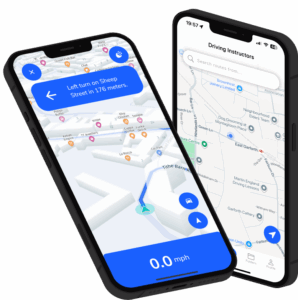
RouteBuddy is a UK driving test preparation app built specifically for learner drivers. It gives you access to commonly used routes around test centres across the UK, with turn-by-turn voice guidance that mirrors the independent driving section of the test itself.
Rather than practising on random roads, you drive the junctions, roundabouts, and stretches of road most likely to feature on your test. The specific junctions where observation faults happen most. The specific roundabouts where positioning faults occur. The specific roads where speed limit changes catch candidates out. By the time test day arrives, none of those moments are surprises.
Sat-Nav Simulation That Mirrors the Test
Since 2017, the independent driving section of the UK practical test has used a sat-nav for around 20 minutes. RouteBuddy mirrors this with turn-by-turn voice guidance through your test centre routes. Following directions on unfamiliar roads becomes second nature before you sit in the examiner’s car.
Always Up to Date
Every route in the RouteBuddy app is kept current with the latest road layouts, speed limits, and traffic conditions. Therefore, what you practise closely reflects what you are likely to face on test day.
Download RouteBuddy on iOS and Android
RouteBuddy is available on the Apple App Store and Google Play. Visit RouteBuddy to find out more.
Practical Steps to Avoid the Top 10 Faults
Before Your Test
- Study DVSA’s official fault data on GOV.UK and identify which faults are most common at your test centre
- Review the Highway Code for junctions, roundabouts, and road markings on the official Highway Code on GOV.UK
- Download RouteBuddy and practise the commonly used routes around your test centre before test day
In the Weeks Leading Up to Your Test
- Practise the sat-nav section using RouteBuddy so following directions becomes automatic
- Focus on mirror use before every speed and direction change on every practice drive
- Do a full mock test on the most common routes with no prompting and in full test conditions
- Check your test centre’s pass rate at the DVSA’s official statistics page
On Test Day
- Make every mirror check visible – turn your head clearly enough for the examiner to see
- Slow down on manoeuvres – control and observation matter far more than speed
- Scan for signs actively on every new road section throughout the entire test
The Bottom Line: Top 10 Reasons for Failing the Driving Test
The top 10 reasons for failing the driving test in the UK are not random. They are predictable, consistent, and very much avoidable with the right preparation. Most of them come down to habits: habits of observation, habits of positioning, and habits of control.
The learners who pass are the ones who have built those habits through deliberate practice on the right roads. With RouteBuddy in your preparation toolkit, the top 10 reasons for failing the driving test stop being traps to fall into and start being patterns you have already prepared for.