

Taking your driving test at the Cambridge Test Centre can be daunting. Many learners fail due to simple mistakes that could have been avoided with practice and preparation. Knowing the most common pitfalls allows you to focus on the areas that matter and increases your chances of passing the first time.
In this guide, we’ll explore the five most common mistakes learners make at the Cambridge Test Centre. We’ll also explain how practising with tools like RouteBuddy can help you prepare effectively and boost your confidence.


5 Mistakes Learners Make at Cambridge Test Centre
1. Poor Observation at Junctions and Roundabouts
One of the biggest reasons learners fail at the Cambridge Test Centre is poor observation. Learners often forget to:
- Check mirrors properly
- Signal correctly before turning
- Watch for other vehicles and pedestrians
Busy junctions and roundabouts around Cambridge require careful observation and timely decision-making. Failing to notice other road users or not signalling properly is a frequent fault.
The DVSA emphasises that proper observation is crucial for safe driving. You can review guidance here: 👉 Practical driving test guidance.
Tip: Practise roundabouts and junctions repeatedly, checking mirrors and signalling each time.
2. Incorrect Lane Discipline
Cambridge has several multi-lane roads and roundabouts where learners struggle with lane discipline. Common errors include:
- Choosing the wrong lane too early
- Drifting between lanes
- Failing to position correctly before a turn
Examiners closely monitor lane positioning during your test. Choosing the wrong lane or failing to stay in your lane can result in minor or serious faults.
Tip: Use practice sessions to focus on lane discipline. Repeated exposure to test routes will help you feel more confident.
3. Speeding or Driving Too Slowly
Maintaining the correct speed is another common area where learners fail at the Cambridge Test Centre. Learners often:
- Drive too slowly out of caution
- Exceed speed limits on faster roads
- Forgot to adjust speed for junctions or pedestrians
Driving too slowly can disrupt traffic flow, while driving too fast increases the risk of losing control. Both can negatively impact your assessment.
Tip: Practise maintaining appropriate speed on different road types and conditions. Focus on smooth acceleration and braking.
4. Mistakes During Manoeuvres
Manoeuvres are a key part of the Cambridge test. Learners frequently fail when performing:
- Parallel parking
- Bay parking
- Pulling up on the right and reversing
Common errors include:
- Not checking mirrors or blind spots
- Incorrect positioning
- Poor control of the vehicle
The DVSA provides detailed guidance on manoeuvres: 👉 Driving test manoeuvres.
Tip: Practise manoeuvres regularly in a safe area or using a driving test route app to replicate real test conditions.
5. Nervousness During Independent Driving
The independent driving section can be stressful, especially at a busy test centre like Cambridge. Learners often make mistakes due to:
- Hesitating at junctions
- Missing turns
- Failing to follow road signs or sat-nav instructions
Examiners want to see that you can drive safely and independently, not just follow instructions. Confidence is key.
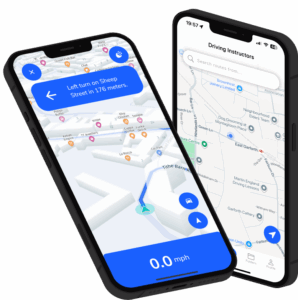
Tip: Use a driving test route app like RouteBuddy to practise independent driving. It provides turn-by-turn directions similar to sat-nav, allowing you to become comfortable with real test routes.

How RouteBuddy Helps Learners Prepare for the Cambridge Test Centre
Practising on real routes is one of the best ways to avoid these common mistakes. RouteBuddy is a driving test route app that helps learners:
- Familiarise themselves with Cambridge routes
- Follow turn-by-turn navigation like a real sat-nav
- Practise independent driving sections
- Track progress and identify weaknesses
By practising consistently with RouteBuddy, learners can reduce nerves, improve observation, and master manoeuvres before the test.
Tips for Passing the Cambridge Test Centre
- Focus on observation – check mirrors, blind spots, and signals at all junctions.
- Practise lane discipline – especially on roundabouts and multi-lane roads.
- Maintain appropriate speed – neither too slow nor too fast.
- Perfect manoeuvres – practise parallel parking, bay parking, and reversing regularly.
- Build confidence in independent driving – use apps or instructor guidance to simulate test conditions.
Consistent practice, especially on real test routes, increases your chances of passing at the Cambridge Test Centre.
Quick FAQs About Cambridge Test Centre
Where is the Cambridge Test Centre located?
The test centre serves learners in Cambridge and the surrounding areas. Find location details here: 👉 Book a driving test.
How long is the test?
Practical driving tests usually last around 40 minutes.
Can I practise the test routes before my exam?
Yes. You can practise with an instructor or a driving test route app like RouteBuddy to simulate real test routes.
Final Thoughts
Failing the driving test at the Cambridge Test Centre is often due to avoidable mistakes. By focusing on observation, lane discipline, speed, manoeuvres, and independent driving, learners can significantly improve their performance.
Tools like RouteBuddy allow learners to practise real Cambridge test routes, build confidence, and reduce anxiety. Consistent practice is the key to passing your driving test safely and successfully.